











By Larry Evans
145 years ago, Nov. 20, 1881
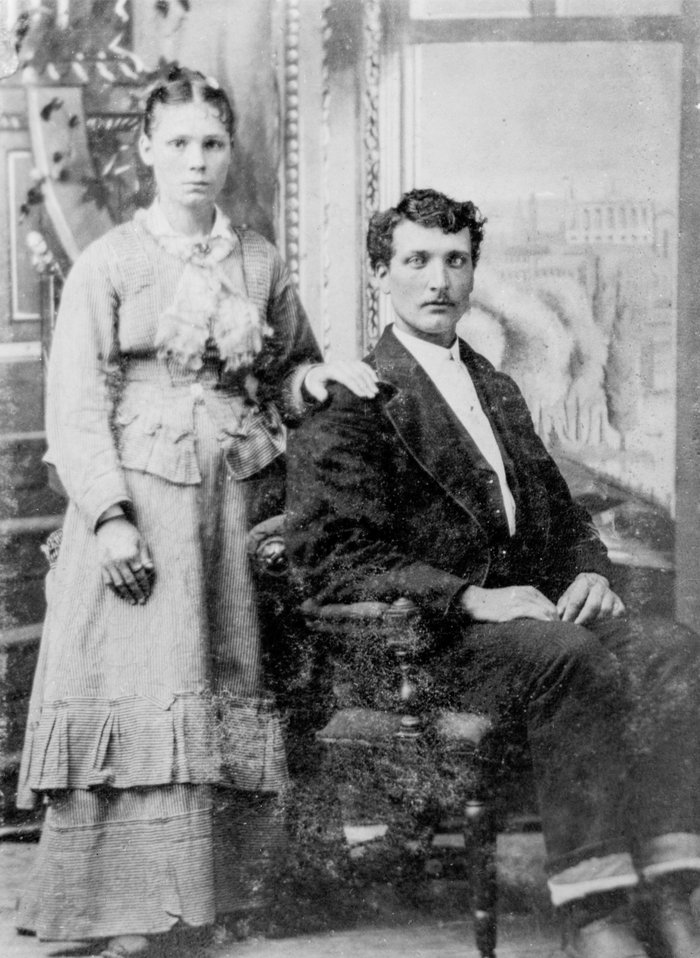
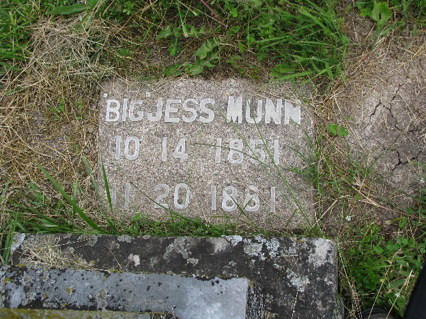
On Nov. 19, 1881, downtown Kirksville was the scene of a main street wild West shootout. It was Saturday afternoon, a day on which many of the county’s rowdies came to town to visit the local watering holes. Sometimes trouble erupted. It was common knowledge that for some time there had been bad blood between a native Adair Countian by the name of Jess Munn, and others of his neighborhood as well as the law enforcement officials of Kirksville and Adair County. For some time Munn had made it clear that he would clean out the town and the officers couldn’t arrest him. Over the course of the previous two- or three-year Munn had successfully resisted arrest by officials after he violated ordinances of the city of Kirksville. On this November Saturday morning, Munn who lived with his wife Samantha, and their four children near the mills on the Chariton, decided to pay Kirksville a visit. “Big Jess” as he was known locally, operated a sawmill with Graff Zimmerman. Before heading to town Munn armed himself despite the efforts of his wife to keep him from going to Kirksville. After arriving in Kirksville he was soon met by Marshal Hill who asked him to “keep sober.” Munn replied that “I do not know about that.” He told others to tell the marshal to keep away from him. About 4 p.m. on Saturday afternoon, just south of the American Hotel, Munn fired two shots from his revolver. He then proceeded on another street and fired two more shots. Marshal Hill hearing the shots rushed to locate Munn. Upon finding him, Marshal Hill told him to put up his revolver and consider himself under arrest. Munn replied that there “was not enough men in town to arrest him.” The argument continued and “Big Jess” walked off headed toward a nearby saloon. In the meantime, assistant marshal Patterson arrived on the scene to assist. Marshal Hill watched from the front of the saloon, but when Patterson arrived he moved to the back door in case Munn came out there. He had just got to the back door as Munn came out. Munn immediately leveled his pistol at Marshal Hill and fired. Exchange of fire continued with the marshal striking Munn in the abdomen. Patterson in the meantime came around the corner and fired at Munn striking him in the head. The two then picked Munn up and carried him to Fowler’s drug store. “Big Jess” lingered until 10 a.m. Sunday morning when he died. The coroner’s inquest which followed concluded that the law officers were justified in their actions. Jess Munn was buried in the Stukey Cemetery near Millard, Missouri. He was soon followed in death by two of his four children and they were buried beside him. In a strange turn of events, Jess’s widow Samantha, at age 28 married 17-year-old Alfred Zimmerman who was the son of Jess’s co-worker at the sawmill. They then had three Zimmerman sons and divorced in 1890. And even stranger yet, Sara Alice Munn, Jess and Samantha’s daughter, then married Alfred Zimmerman, her previous stepfather, who her mother had divorced. Thus ended Kirksville’s wild West shootout.
105 years ago, Nov. 18, 1921
Three heavy sentences were handed down in Adair County Circuit Court for chicken theft. It was believed that the tough sentences would discourage “chicken stealing” in the area. The men residing in the Greentop vicinity were handed three- to five-year terms in the state penitentiary.
100 years ago, Nov. 15, 1926
All the hard-surface road from Kirksville to Moberly was completed, and the 60-mile distance between the two towns could be made “in good time.” Hard surfaced meant that the road was partially gravel and a portion concrete pavement. Although the road was rough in places, it was much better than no pavement in muddy weather.
100 years ago, Nov. 17, 1926
Adair County was the largest producer of coal in this part of the state during 1925 according to a statement made by the Bureau of Mines of the Department of Commerce. The coal mined in the big mines, outside of the wagon mines, was 188,825 tons with 335 men employed. Wagon mines were large producers in Adair County and many were engaged in selling the coal on the local market. Adair County’s production exceeded that of Macon, Randolph, Boone, Caldwell, Chariton, Cooper, and Platt counties.
90 years ago, Nov. 15, 1936
A total of six people had died recently of the intestinal infection bacillary dysentery according to a report issued by Dr. E.S. Smith, a physician at Grim-Smith Hospital and member of the State Board of Health. Most of the victims were children. Dr. Smith also reported that he felt the bacterial disease was waning and fewer cases were being reported. Smith attributed the disease to contaminated well water. In explaining his reasoning for the decline in the number of cases, Dr. Smith stated: “I think most persons have heeded warnings to boil drinking water which comes from wells.” He said that most contaminated water sources were due to the gush of water through drainage channels opened by the drought.
Copyright 2026 by Larry Evans
The weather, what’s happening today and the top local stories, all in one email, every morning.