











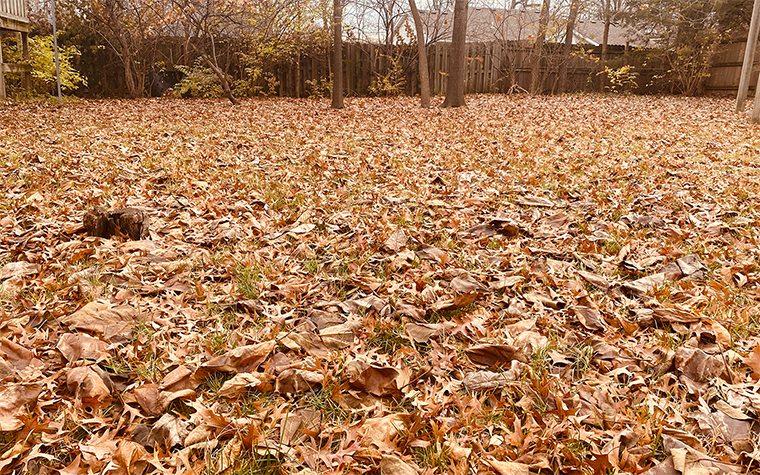
Fallen leaves are a resource, not just a chore, according to University of Missouri Extension horticulturist David Trinklein.
Leaves that pile up over lawns and low ornamental plants can pack into a tight mat, particularly during a wet winter, Trinklein said. A thick layer can block sunlight from turfgrass and trap moisture, which raises the risk of disease.
Rather than bagging leaves, Trinklein recommends recycling them. One option is to shred them into the lawn. On a dewy morning, he said, set the mower to its highest setting and mow in a crisscross pattern to reduce the leaves to the size of confetti. Research has shown a layer of leaves up to 6 inches thick can be mulched into a lawn with no ill effects.
Composting is the other option. Leaves contain small amounts of nitrogen, phosphorus and potassium and are a rich source of organic matter that improves soil structure, Trinklein said. Because most leaves are low in nitrogen and high in carbon, they break down slowly unless nitrogen is added.
For best results, Trinklein said, a backyard compost pile should cover at least about 25 square feet at its base and stand 3 feet high, and it should sit in a well-drained area. Start with a 6- to 8-inch layer of leaves and add a nitrogen source on top of each layer. About 10 ounces of a pure nitrogen fertilizer such as urea, or 2 pounds of a general garden fertilizer such as 12-12-12, is needed for each bushel of packed or shredded leaves.
The center of a properly made pile should reach 110 to 140 degrees within four to five days, Trinklein said. Turn the pile every few weeks until the leaves are a uniform dark color. Composting is complete when the pile no longer heats after being turned.
Source: University of Missouri Extension. Photo: MU Extension file photo.
The weather, what’s happening today and the top local stories, all in one email, every morning.