











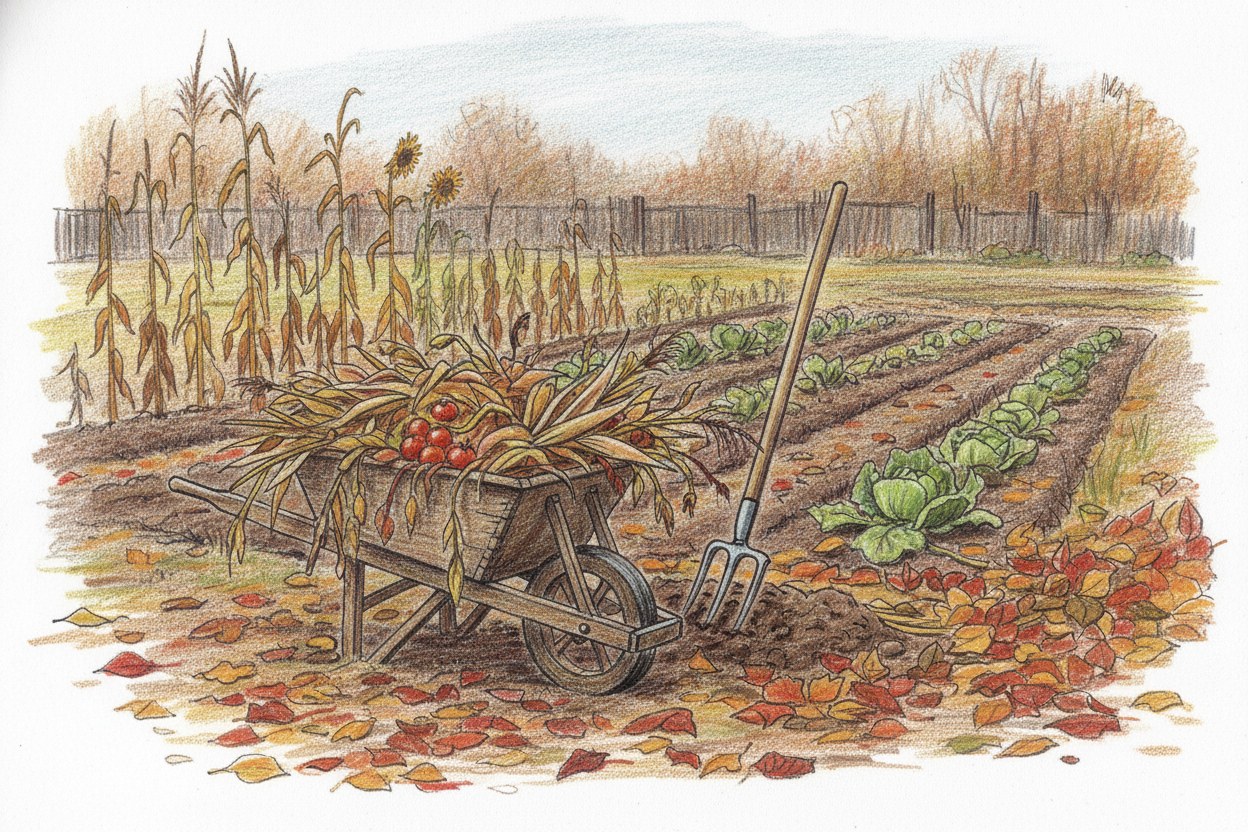
Clearing plant debris and improving the soil in the fall can head off pest and disease problems in next year’s garden, according to University of Missouri Extension horticulturist David Trinklein.
After flower and vegetable gardens finish producing, Trinklein recommends removing plant debris, which can shelter insect pests, and taking steps to improve the soil for early planting next season. Gardeners who plan to plow or till in the fall should first pull and discard perennial weeds and any plants that developed a serious disease, along with diseased leaves that have fallen to the ground.
Total removal of debris probably isn’t possible, Trinklein said, but removing as much as possible and tilling under the rest will speed decay and lower the amount of disease inoculum that survives the winter. Fall tillage will not solve soilborne diseases such as vascular wilt of tomato. Crop rotation may reduce their severity, and disease-resistant varieties may help where available.
Fall is also one of the best times to add organic matter, fertilizer or limestone before tilling, according to MU Extension. Manure, compost, leaf mold or peat moss can go on after the debris is removed. Fresher manure can be used in the fall because it has time to decompose before the next growing season, while spring applications should use well-decomposed manure. Heavy soils that crust or form clods benefit from several inches of organic matter worked in each fall, and sandy soils also benefit.
Gardeners should be wary of herbicide contamination when applying manure or compost, Trinklein said. Damage to sensitive crops such as tomatoes has often been traced to compost contaminated with long-lived herbicides used on forage and hay. Symptoms include poor seed germination, twisted or malformed new growth, elongated fruit and leaves, and death of younger plants.
Fall is also a good time for a soil test, he said. Gardens that have never been tested should have one run, and testing about every five years is enough after adjustments are made unless fertility or plant nutrition problems appear. Gardeners who keep battling the same diseases and pests may have a sanitation problem, and cleaning the garden soon after the season ends is better than waiting until spring.
“Fall cleanup is not just tidying up,” Trinklein said. “Gardeners are setting the stage for a productive growing season after winter loses its icy grip on nature.”
Information from University of Missouri Extension. Graphic: Created with Google Gemini.
The weather, what’s happening today and the top local stories, all in one email, every morning.
Get Kirksville news in your inbox, free.
Sign up for the newsletterMore from Kirksville
- MU Extension releases 2027 crop and livestock enterprise budgets for Missouri farmers
- MU Extension specialist serving Macon County wins state Farm Bureau award
- MU Extension to offer free online farm tax workshop Dec. 1
- Food thermometer is more reliable than pop-up timer for turkey, MU Extension specialist says
- Keep holiday buffets safe from first serving to leftovers, MU Extension specialist says
Accuracy is important to us. If you see a mistake, please notify us at news@kirksvillewire.com or visit kirksvillewire.com.
Get Kirksville Wire in your Facebook feed, and tell us what is happening in your town.
Follow us on FacebookSend us your news